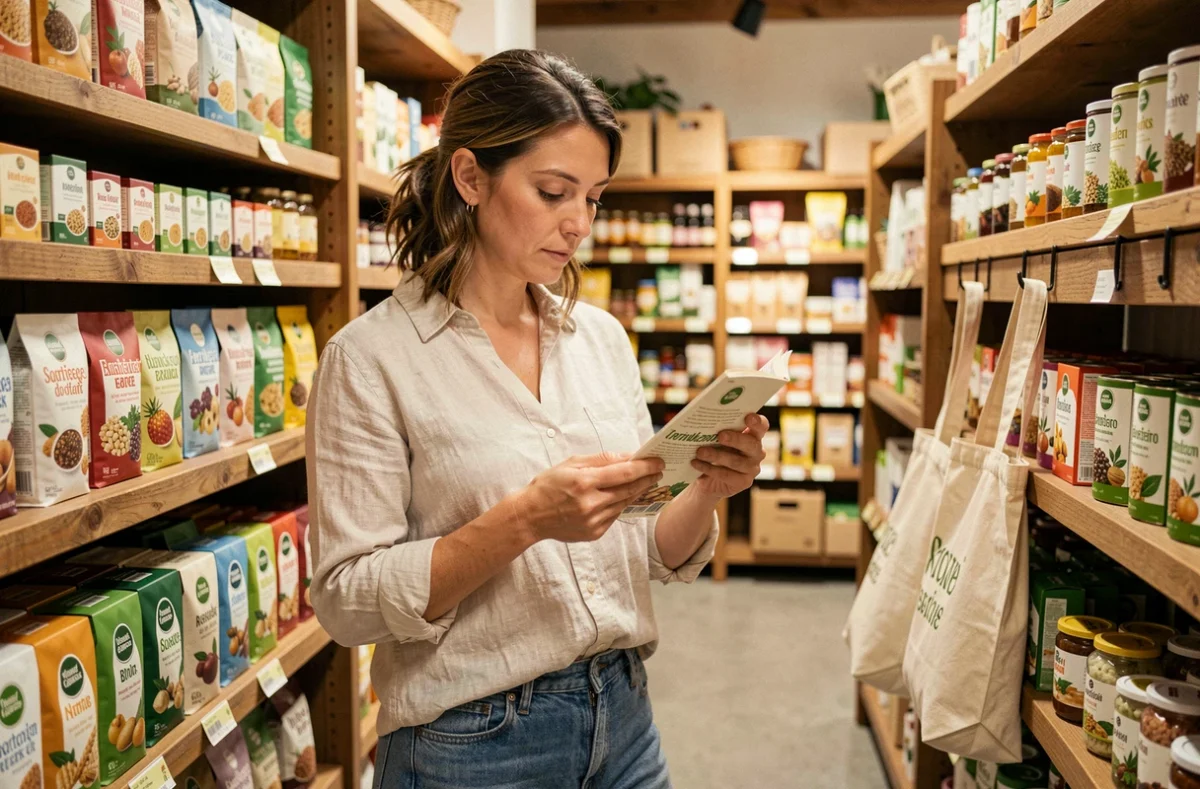
An identical pack of muesli can cost twice as much at one organic retailer as at another. Yet the European logo on the packaging guarantees the same production requirements. The price difference therefore comes down to other factors: distribution channels, pricing policies, the origin of raw materials, and commitment to producers. Understanding these factors makes it easier to compare organic stores without judging quality by a label alone.
Limited selection and unclear origins: the real risk of low-cost organic food
A store with low prices can achieve them in several ways. The most obvious is by reducing the number of products it stocks. Less choice means concentrating purchasing volumes on a handful of suppliers, which lowers the unit cost.
The problem arises when this reduction affects local products or French supply chains. In 2025, organic sales grew nationwide, but the area of farmland under organic production and the number of organic farms both declined. Commercial growth does not necessarily benefit French producers. If a low-cost retailer sources most of its products from abroad without clearly stating so, consumers are supporting a supply chain whose impact they cannot assess.
Before choosing a store based solely on the checkout total, check two things. First, how clearly the origin is shown on labels: if the source is listed for only one in five products in a section, that should raise concerns.
Next, look at the variety of fresh produce: a store offering fewer than ten types of fruit and vegetables in peak season has probably cut back on local sourcing. A comparison of affordable organic stores on Pur Bien-Être can help you spot these differences between retailers.
Biocoop, La Vie Claire, Naturalia: what really sets these specialist retailers apart
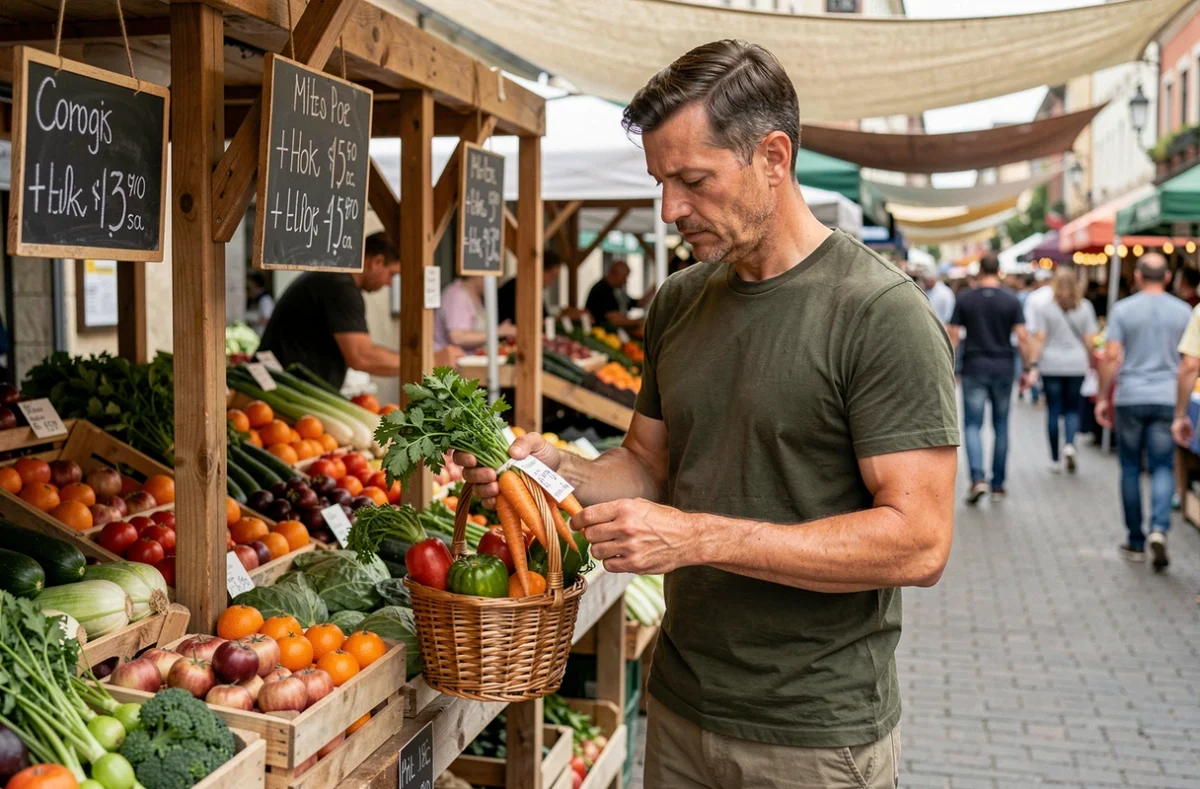
Have you noticed that two organic stores on the same street can offer completely different shopping experiences? That’s normal: their internal standards differ.
Biocoop has a charter that goes beyond the European organic label. The cooperative network selects its suppliers based on additional social and environmental criteria. This commitment can mean higher prices, but also more detailed traceability in store.
La Vie Claire offers a mixed range, combining its own products with third-party brands. Prices generally fall between those at Biocoop and those at mainstream supermarkets. The retailer highlights the French origin of some of its products, though this should be checked product by product by reading the packaging.
Naturalia, a subsidiary of a major retail group, has an urban focus. Its range includes more processed foods and well-known brands. Prices are often more affordable, but the selection of local products varies considerably from one store to another.
In 2025, specialist organic retailers also saw stronger sales growth than mainstream supermarkets, according to data from Agence Bio. This growth shows that consumers are not just looking for the lowest price: they also value advice, transparency, and a wide range of products.
Supermarket own-label products: label reliability and the limits of low prices
Organic own-label products (Carrefour Bio, U Bio, etc.) account for a significant share of organic sales in supermarkets. Are they subject to less rigorous certification? No. Organic own-label products are subject to the same checks as other certified brands. You can verify this by checking the code of the certification body printed on each package.
The real issue is not regulatory compliance. It’s what the label doesn’t tell you. The European logo sets standards for organic production, but it does not tell you what proportion of the store’s overall range is organic, the precise geographical origin of products, or the terms on which producers are paid.
A low-priced organic own-label yogurt and an organic yogurt from a specialist brand can carry the same logo. The difference comes down to three factors that aren’t obvious at first glance:
- Where the milk comes from: France, the European Union, or outside the EU. This information appears in small print, often on the back of the packaging.
- How much the producer is paid: some specialist retailers publish their pricing schedules, while others do not. Without this information, consumers cannot tell whether a low price comes from the retailer’s margin or the farmer’s pay.
- Ingredients: a processed organic product may contain additives permitted under organic standards but excluded from the recipes of some more committed brands. Comparing ingredient lists is still the most reliable approach.
La Fourche and the subscription model: comparing the real cost
La Fourche operates differently from brick-and-mortar stores. The idea is simple: an annual subscription gives you access to discounted prices on an online catalogue. This model removes the traditional retailer’s margin.
To find out whether this model works for you, calculate the real cost. Add the annual subscription fee to your purchases over the same period, then compare the total with what you would have spent at your usual store. The subscription only pays off once you reach a certain monthly spending level.
Another point to consider: La Fourche mainly sells pantry staples, personal care products, and a limited selection of fresh food. Local fresh produce, seasonal fruit and vegetables, and bulk goods are still the domain of brick-and-mortar stores. Comparing La Fourche with Biocoop or Naturalia means comparing two types of retailer that do not meet the same needs.
A framework for comparing stores accurately
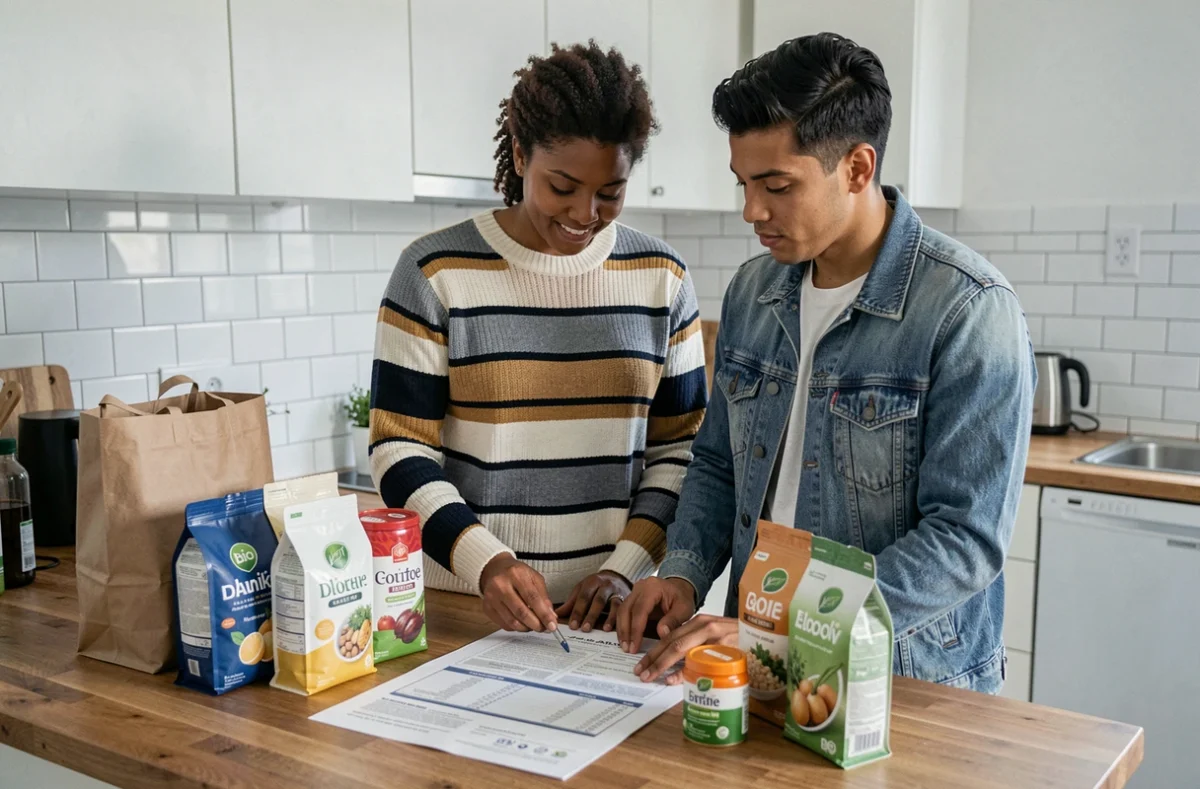
Rather than ranking retailers from cheapest to most expensive, use a set of criteria tailored to your priorities. Here are the factors that make a real difference:
- Transparency about origin: does the retailer consistently show where its fresh and processed products come from (country, region)?
- Share of the range sourced from French supply chains: a store that highlights its partnerships with local producers offers a shorter, more traceable supply chain.
- Range of bulk products: buying in bulk lets you control quantities and reduce the cost per kilo, but not all retailers offer the same number of products.
- Pricing on everyday essentials (flour, oil, pasta, milk): these products form the basis of your shopping basket and reveal a store’s real pricing strategy.
Applying this framework to two or three stores near you will give you a more reliable result than a national ranking. Prices and product ranges vary by region, store size, and local partnerships. The cheapest organic store in an online comparison may not be the one that best suits your actual shopping basket.