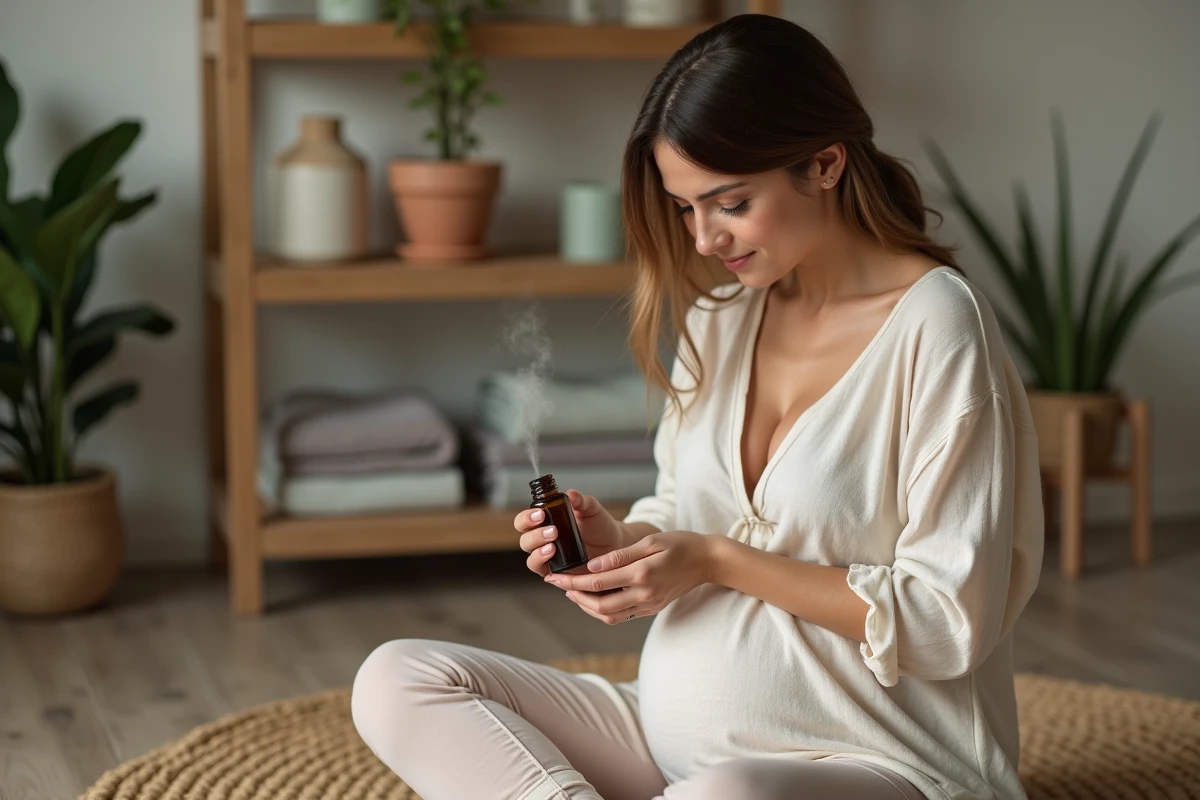
A persistent morning sickness, difficulty falling asleep, heavy legs by the end of the day: the temptation to reach for a bottle of essential oil is understandable. These concentrated plant extracts are not just simple ambient fragrances. They contain active molecules capable of crossing the placental barrier, which radically changes the way they should be approached during pregnancy.
What poison control centers have observed in recent years
French poison control centers have reported a steady increase in calls related to essential oils among pregnant women since 2020. The most common situations involve topical uses (stretch marks, heavy legs) and self-treatment of ENT infections.
Most cases remain benign. However, several reports mention uterine contractions and discomfort that required hospital monitoring. Toxicologists now recommend maximum restriction as a first-line approach for pregnant women.
The problem does not come from the plant itself, but from the concentration. A lavender herbal tea and a drop of lavender essential oil are not comparable in terms of molecular load. Some compounds, such as ketones (found in sage, peppermint, or menthol eucalyptus), are neurotoxic even at moderate doses. Understanding essential oils during pregnancy starts with this distinction between raw plant form and concentrated extract.
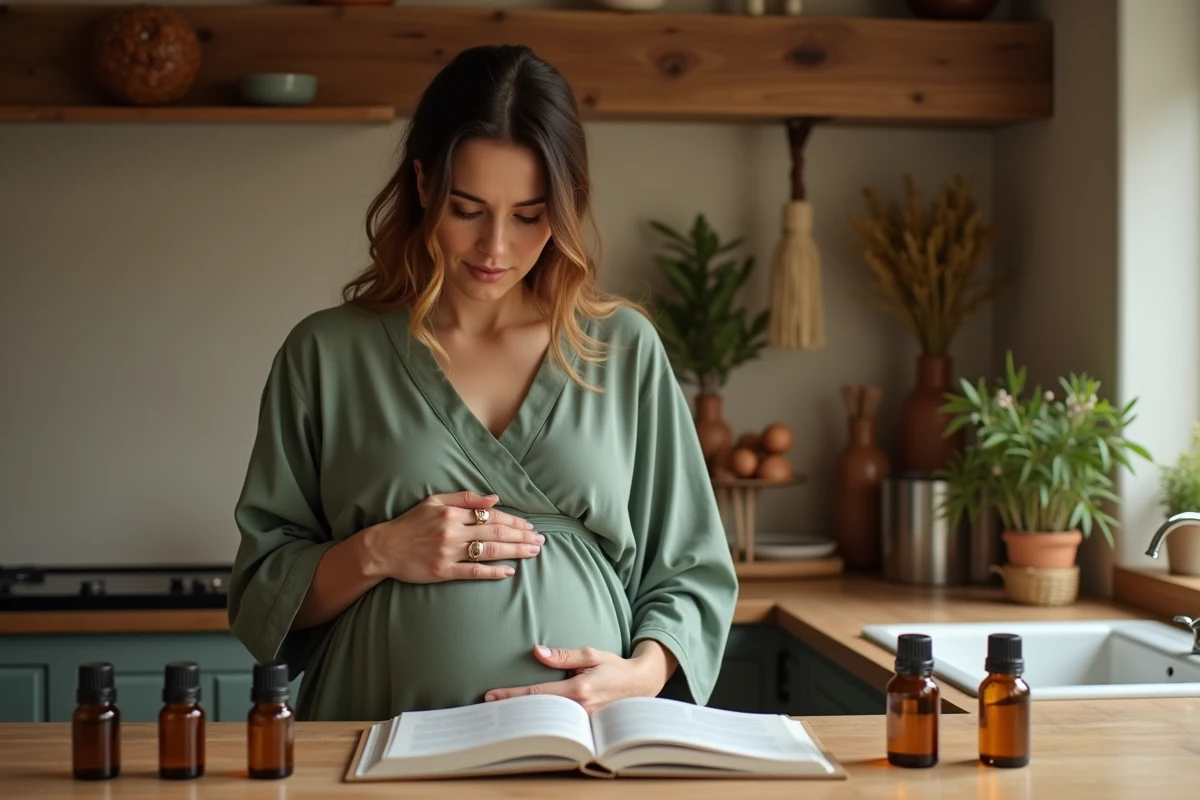
Essential oils and pregnancy: why the first trimester is a red line
ANSM and HAS now include essential oils in the category of self-medication products to avoid during pregnancy, alongside certain dietary supplements. This official classification contrasts with the discourse of many aromatherapy websites, which tend to speak of “caution” or “proper dilution.”
No essential oil is considered safe during the first three months. The reason is simple: this is the period of organ formation in the fetus (organogenesis). Active molecules that cross the placenta can interfere with this process, and the exact risk is not always quantifiable for each oil.
Even atmospheric diffusion, often perceived as harmless, exposes one to inhalation of volatile compounds that enter the bloodstream. Just because it is not applied to the skin does not mean the body is not exposed.
What changes from the fourth month
After the first trimester, a handful of essential oils may be considered, but only through diluted topical application or brief diffusion. Oral use remains discouraged throughout pregnancy, unless explicitly prescribed by a doctor.
Have you noticed that recommendations vary greatly from one site to another? This is because there is no single official list validated by a French health authority. The “authorized/prohibited” lists found online are compilations of opinions from aromatherapists, not regulatory references.
Essential oils allowed after the first trimester: which ones and how
True lavender (Lavandula angustifolia) is most often cited as tolerable starting from the second trimester. It is used in short diffusion to promote relaxation, or diluted in a carrier oil for light massage.
Lemon (Citrus limon) is also among the frequently mentioned oils for alleviating persistent nausea, through direct olfaction (opening the bottle for a few seconds under the nose).
Before any use, even for these reputedly gentle oils, three basic rules must be systematically followed:
- Dilute the essential oil in a carrier oil at a low concentration (a few drops in a neutral base), never apply it pure to the skin
- Limit atmospheric diffusion to about fifteen minutes in a ventilated room, in the absence of young children
- Consult a healthcare professional (midwife, pharmacist, doctor) before each new use, even if the oil is labeled as “gentle”

Essential oils prohibited during pregnancy and breastfeeding
Some essential oils are strictly contraindicated throughout pregnancy and breastfeeding. The reason lies in their chemical composition: the presence of neurotoxic ketones, hepatotoxic phenols, or molecules with hormonal effects.
Peppermint, common sage, and camphor rosemary are among the most well-known prohibitions. Menthol eucalyptus (Eucalyptus dives), Atlas cedar, and hyssop also complete the list of high-risk oils.
Oils containing camphor or menthol deserve special attention. These compounds pose a risk of laryngeal spasm in infants and can cross the placenta in significant amounts.
- Common sage: contains thujone, a neurotoxic and potentially abortifacient ketone
- Peppermint: menthol can trigger contractions and cause a vagal reflex
- Camphor rosemary: camphor is toxic to the fetal nervous system
- Menthol eucalyptus: rich in piperitone, a particularly aggressive ketone
Frequent confusion between botanical varieties
Radiata eucalyptus (Eucalyptus radiata) and menthol eucalyptus (Eucalyptus dives) do not present the same risk profile at all. Checking the Latin name on the bottle is the only reliable way to distinguish a tolerable oil from a dangerous one. The mention of “eucalyptus” alone is not sufficient.
The same problem arises with rosemary: verbascoside rosemary has a different profile from camphor rosemary. Buying an essential oil based solely on the common name of the plant exposes one to dosage and contraindication errors.
Aromatherapy during pregnancy: the healthcare professional reflex
Pregnancy is not the time to experiment with self-taught aromatherapy. The pharmacist remains the first accessible contact to verify the compatibility of an essential oil with a state of pregnancy or breastfeeding. Midwives trained in aromatherapy can also assist with targeted use.
An essential oil bottle does not come with instructions comparable to those of a medication. The legal mentions on the packaging are often brief, and contraindications related to pregnancy do not always appear explicitly. This lack of regulatory oversight in the market reinforces the need for qualified external advice.
The appeal of natural solutions during pregnancy is legitimate. The reflex to acquire is simple: treat each essential oil as an active product, not as a harmless cosmetic. A bottle of a few milliliters sometimes concentrates the equivalent of several tens of kilograms of plant. This potency, which makes aromatherapy interesting, is also what renders it incompatible with self-medication in pregnant women.