The field of architecture is experiencing a green revolution, driven by the need to mitigate the environmental impact of constructions. Designers are turning to sustainable solutions that are in harmony with nature. The integration of eco-friendly materials, the use of renewable energies, and the implementation of innovative construction techniques are at the forefront of this transformation. These ecological approaches aim to reduce the energy consumption of buildings, optimize resource use, and enhance the quality of life for occupants, all while preserving the balance of ecosystems.
Technological Advances and Innovative Materials for Sustainable Architecture
Innovations in architecture are multiplying, aiming for a sustainable architecture that not only reduces negative impacts on the environment but also actively contributes to the regeneration of ecosystems. Innovative materials play a key role in the emergence of these new practices. Take, for example, wood frame, a renewable and carbon-storing material that presents itself as a preferred alternative to energy-intensive steel or concrete structures.
Among the pioneering entities, Geoship is leading the construction sector into a new era with its bioceramic domes. This California-based startup offers a form of ecological construction that not only withstands climatic challenges but also promotes a minimalist carbon footprint. This push towards ecological innovation is also evident in the use of thermal mass walls, which utilize thermal mass to store and redistribute solar heat, an elegant and effective principle for optimizing the passive energy of buildings.
The ecological house construction is based on a coherent set of approaches, where every material and technical choice contributes to a sustainable building. Construction materials are evolving to incorporate superior insulating properties, recycling capabilities, and low environmental impact production. Architectural design strategies, focused on maximizing natural light, natural ventilation, and harmonious integration into the environment, are all facets of a more sustainable architecture.
Integration of Nature and Energy Autonomy in Ecological Housing
The concept of ecological housing goes beyond the use of renewable materials or energy efficiency. It also encompasses the notion of energy autonomy, which is fundamental for reducing the carbon footprint of buildings. Examples such as the Powerhouse Brattørkaia project illustrate this ambition by creating the world’s largest positive energy building, capable of producing more energy than it consumes, thanks to the optimized use of renewable energy. The passive house fits into this logic by minimizing heating and cooling needs through advanced architectural design and thermal insulation.
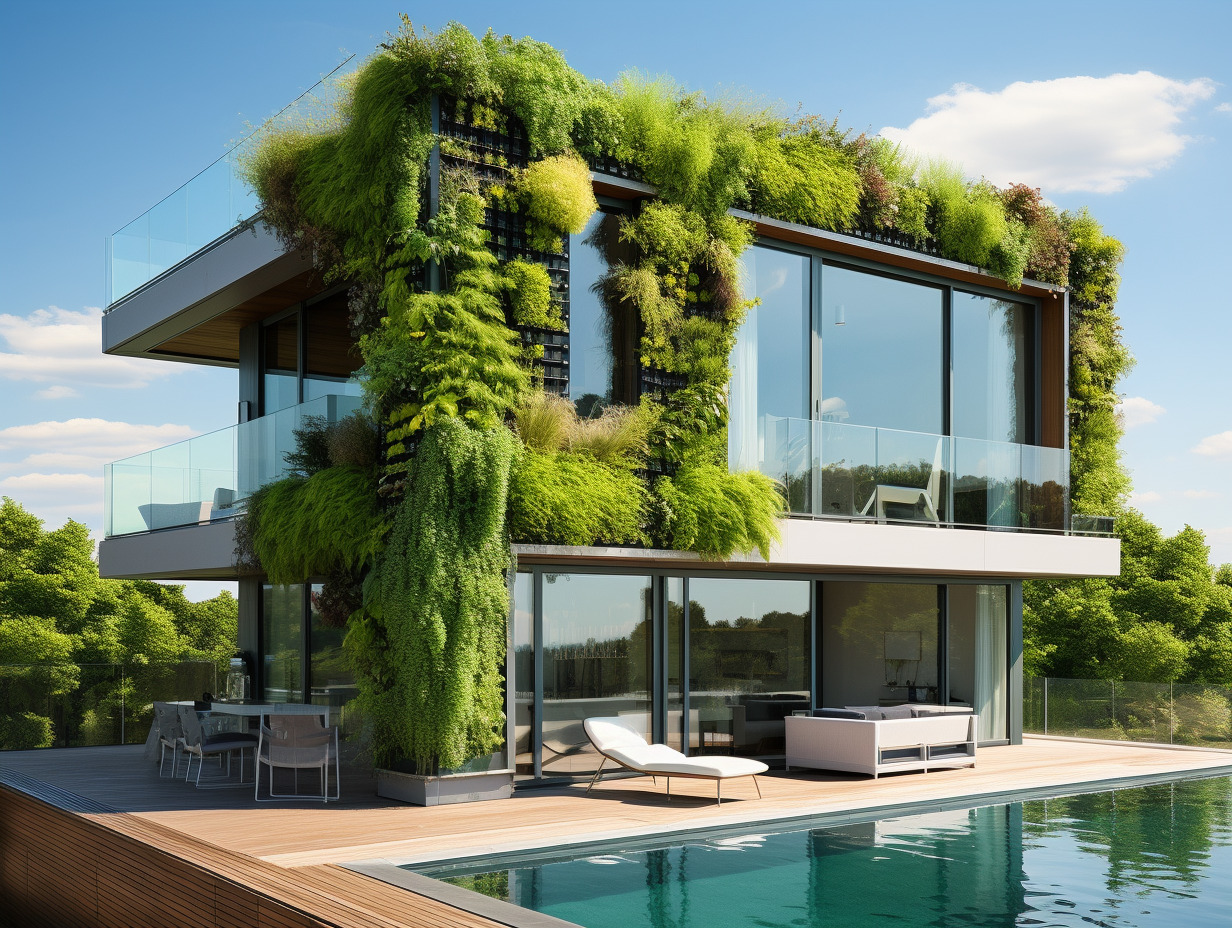
The Smart Forest City Cancun goes further by envisioning a symbiosis between urban planning and ecology. This initiative proposes a fully eco-efficient city, integrating vegetation and urban agriculture to create a self-sufficient ecosystem for food and water, while offering exceptional quality of life. The Citicape House, with its impressive living wall, demonstrates how architecture can contribute to combating pollution in urban areas by improving air quality and promoting biodiversity.
Advances in the field of smart homes and connected homes allow for the optimization of resource use, maximizing energy efficiency and reducing waste. The Zero Waste Bistro, made of recycled and recyclable materials, proves that it is possible to combine design, functionality, and respect for the environment. Energy renovation, by integrating intelligent management systems and better insulation, transforms existing structures into models of energy efficiency, thus proving that innovation and sustainability can also be found in the requalification of old buildings.