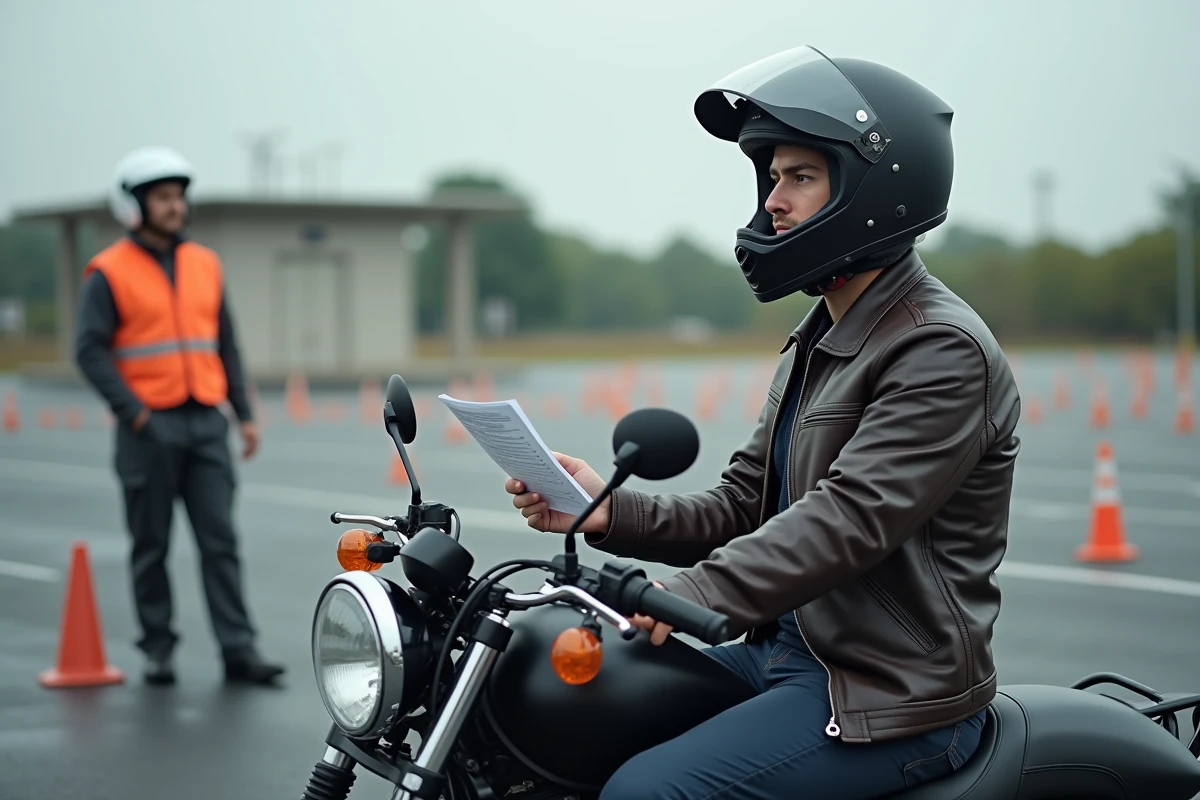
Obtaining a motorcycle license requires different levels of effort depending on the country you are in. Between progressive systems with multiple tiers, technical plateau tests, and mandatory training spread over several years, some states turn access to riding a motorized two-wheeler into a long and demanding process. The regulatory framework varies greatly from continent to continent, and recent European developments further accentuate these disparities.
Progressive System A1, A2, A: Stacking Steps in Europe
The structure of the motorcycle license in the European Union is based on a categorization (A1, A2, A) linked to age and machine power. This system, already restrictive at its inception, has tightened in recent years.
Several EU countries have reinforced the progressive pathway in response to European Commission recommendations on road safety, with more age thresholds, power limitations, and mandatory extension training rather than simple administrative updates.
In practical terms, accessing a full-power motorcycle (category A) may involve going through two intermediate levels, each with its dedicated training, required riding hours, and separate examination. It is no longer a license that one obtains once: it is a multi-step journey spread over several years.
A detailed overview of these requirements is available through the hardest license in Europe on Moto Sites, which compares the tests country by country.
Motorcycle License in Japan: Plateau Tests and High Failure Rates
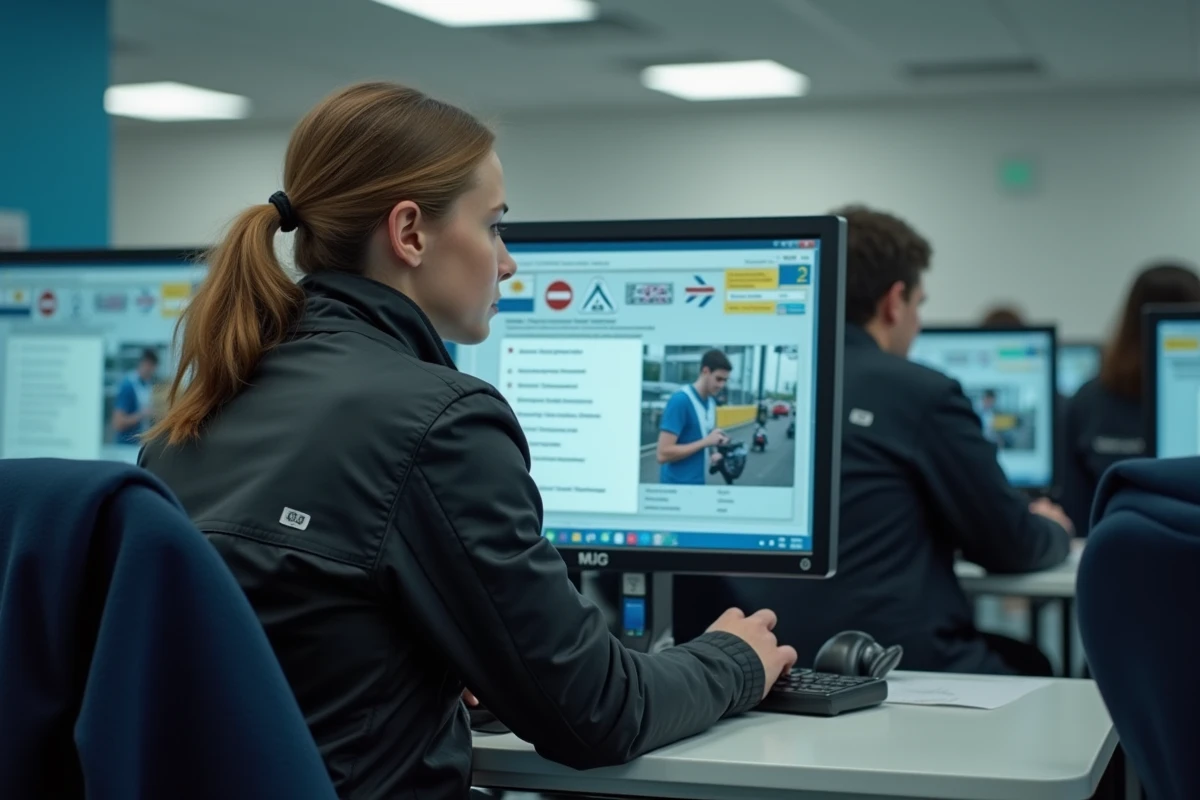
Japan applies a model very different from the European standard. The practical exam takes place entirely on a plateau, in a closed circuit where the candidate performs low-speed maneuverability exercises: slalom, emergency braking, narrow beam crossing, U-turns in a confined space. The precision required is such that the slightest foot on the ground results in immediate failure.
The training pathway distinguishes several engine sizes, with separate exams for small and large motorcycles. Candidates aiming for a high-powered machine must demonstrate technical mastery on exercises calibrated to the nearest centimeter. The first-time pass rate remains low, prompting many candidates to make multiple attempts.
The Japanese peculiarity also lies in the fact that the open road test does not exist in the classical sense. All evaluation focuses on the plateau, prioritizing pure technique at the expense of traffic reading. A newly graduated Japanese motorcyclist masters slow riding but encounters real traffic without formal supervision.
United Kingdom After Brexit: Lengthened Modular Pathway
The British system already combined several steps before leaving the EU. Since the end of the Brexit transition period, the situation has become complicated for European motorcyclists residing in the UK. Direct license exchange is no longer possible for an EU national who settles permanently: they must go through part of the local pathway again.
This pathway is divided into three distinct modules:
- The CBT (Compulsory Basic Training), a mandatory initial training that allows conditional riding for a limited time.
- Module 1, a maneuver test off the road (emergency braking, avoidance, low-speed control) on a dedicated area.
- Module 2, an open road exam with an examiner following the candidate and communicating via radio.
The accumulation of these steps, each with its own booking timelines and fees, significantly extends the process. For a motorcyclist already holding a full license in their home country, having to restart this pathway from the beginning represents a heavy administrative and financial burden.
Motorcycle License in France: Cost as an Additional Filter
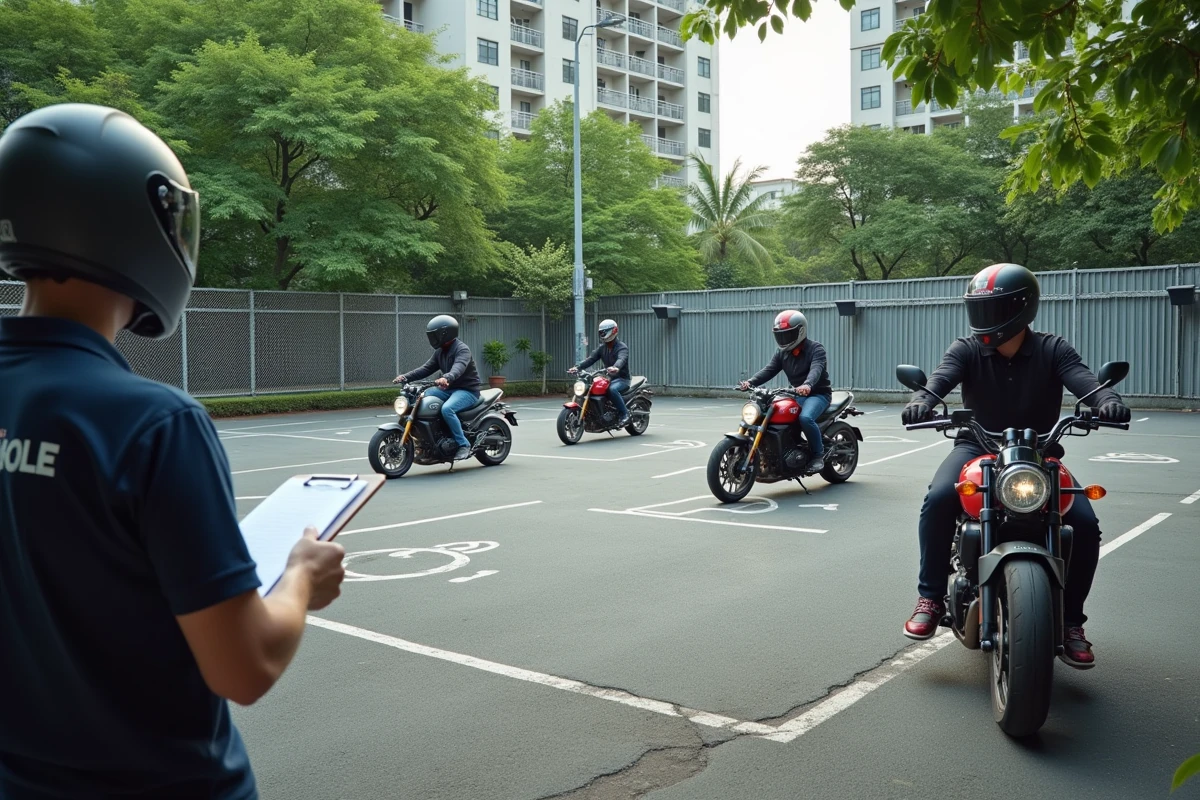
France combines a theoretical exam (highway code), a technical plateau test, and a road exam. The motorcycle license reform introduced demanding plateau exercises: slow riding, braking, avoidance, timed courses. The French plateau remains one of the most feared tests by candidates, with exercises where the minimum speed imposed and the precision of trajectories leave no margin for error.
The financial factor also weighs in. Complete training at a driving school represents a significant budget, and additional hours in case of failure quickly inflate the bill. This cost acts as a filter that excludes some candidates even before they present themselves for the exam. The progressive system from A2 to A adds mandatory additional training after two years of practice, further extending the total duration of the pathway.
Recognition of Foreign Licenses: An Administrative Puzzle
Beyond the difficulty of the tests themselves, the question of the validity of a motorcycle license obtained abroad complicates the picture even further. Within the European Economic Area, licenses obtained in a member state are recognized without formalities. In contrast, for licenses issued outside the European framework, each country applies its own rules for exchange or conversion.
Some states require retaking all or part of the tests, even for experienced motorcyclists. Controls have tightened in recent years in response to the phenomenon of licenses obtained in countries with less strict exams, then presented for exchange in a European country. Authorities now verify the actual residence of the holder at the time of obtaining the license, which limits circumvention strategies.
The difficulty of the motorcycle license is not limited to the technicality of a plateau exam or the number of modules to validate. It stems from the combination of the regulatory framework, the cost of training, the imposed progressive system, and restrictions on international recognition. Countries that accumulate these constraints, such as Japan, the United Kingdom, or France, effectively turn obtaining a motorcycle license into a process where perseverance counts as much as riding talent.