The orientation of a house is a crucial factor that determines the amount of natural light and heat it receives throughout the day. Homeowners and architects must carefully consider the direction in which different rooms and windows are facing to maximize sunlight and energy efficiency. A good orientation can reduce heating and lighting costs while providing increased comfort for residents. Seasonal variations, latitude, and surrounding elements such as vegetation or nearby buildings also influence the impact of orientation on daily sunlight.
Impact of Orientation on Sunlight in Main Rooms
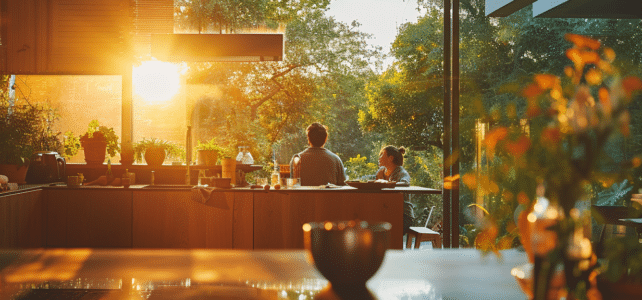
Thermal comfort and brightness depend on the orientation of living spaces. For example, the living room, the central room of the home, oriented towards the south ensures optimal sunlight throughout the day. This exposure benefits from significant solar gain, especially in winter, when natural heat is welcome. Conversely, a bedroom facing east will enjoy morning sun, ideal for a gentle wake-up, but will be shielded from the intense afternoon heat, thus ensuring a cooler temperature for the night.
As for the northwest exposure, it offers soft and less direct light. Rooms on this side receive sunlight in the late afternoon. The northwest exposure sun until what time? Generally, these rooms enjoy light until early evening in summer, a boon for activities requiring good brightness without the drawbacks of excessive heat.
However, vegetation and neighboring buildings can influence sunlight. A tree in front of a south-facing window, for example, can significantly reduce brightness and solar gain, thereby altering the thermal comfort of the affected room. These environmental factors, often overlooked during design or real estate purchase, have a direct impact on the indoor experience and the well-being of residents.
Solar orientation must be studied precisely, taking into account the specifics of each home. Building professionals, such as architects and builders, have the expertise necessary to anticipate the effects of orientation on sunlight. Their recommendations allow for adjustments in the layout of main rooms and the strategic positioning of openings to maximize the capture of natural light and solar heating while maintaining occupant comfort.
Practical Tips for Optimizing Orientation and Sunlight
Maximize solar gains in living spaces by opting for a south or southwest orientation. The kitchen, living room, and dining room will thus benefit from generous brightness and natural warmth, especially during the colder seasons. For spaces like the pantry or garage, which are less dependent on natural light, a north or east orientation may be wise, thus limiting overheating in the summer.
The placement of openings such as windows, sliding glass doors, and French doors should be carefully considered. Favor large openings to the south to capture light, and ensure that west-facing facades are equipped with shutters or sunshades to moderate light intensity and heat in the late afternoon. This will contribute to better thermal comfort and a reduction in cooling needs.
Before any construction or renovation project, consult the Local Urban Planning Plan (PLU) and the current urban planning regulations. They may contain specific requirements regarding the orientation of buildings. The existing thermal regulations impose energy efficiency standards that can influence the design of your house or apartment.
Working with an architect or interior designer can be decisive. These professionals have the expertise to advise on room orientation based on the specifics of your land and project. A bioclimatic house, for example, takes advantage of orientation and design to optimize solar gains and reduce energy consumption. Their informed perspective will help you combine aesthetics, functionality, and energy performance.