
In 2025, half of patients with severe lung injuries could receive personalized therapy stemming from the latest advances in biotechnology. Phase III clinical trials on bispecific antibodies show a response rate exceeding 45%, surpassing the standards observed with conventional treatments.
The combination of immunotherapy and targeted therapies is changing the survival trajectory in several forms of advanced lung cancer. Genetic biomarkers now guide the majority of therapeutic decisions, significantly reducing the relapse rate after an initial remission.
Why damaged lungs remain a major medical challenge in 2025
The fragility of the lung organ is evident in its propensity to be attacked from all sides: toxic agents, infections, and especially lung cancer. This scourge remains one of the leading causes of mortality in France, affecting all genders. The numbers are stubborn: even with more effective diagnostic tools, the majority of patients consult when the disease has already taken hold. Warning signs, such as persistent cough, shortness of breath, and chest pain, often emerge too late, limiting the chances of curative treatment.
Lung cancer is not a single disease but several. We distinguish between non-small cell lung cancer (NSCLC) and small cell lung cancer (SCLC). NSCLC itself includes subtypes: adenocarcinoma, squamous cell carcinoma, large cell carcinoma. Prognosis, treatments, and progression: everything depends on the stage at diagnosis, the histological type, certain biomarkers, age, and physical condition. This complexity, combined with the biological diversity of tumors, explains why it remains so difficult to sustainably prolong remissions.
The causes and symptoms vary from patient to patient: tobacco, pollution, heredity, occupational exposure… This diversity gives rise to very different profiles in the hospital. This is why treatments for damaged lungs must be tailored to each care pathway.
- Some patients will benefit from surgery or radiotherapy.
- Others will require chemotherapy or targeted treatments.
- Individual responses to treatments remain unpredictable, even with recent advances.
In the face of this mosaic, adapting protocols becomes the rule. The possibility of a durable remission now relies on the fine integration of molecular diagnostics and access to the latest clinical innovations.
What new treatments are emerging against lung cancer and what hopes do they inspire?
The therapeutic arsenal for lung cancer has expanded in 2025, with concrete advances for patients. For non-small cell lung cancer (NSCLC), neoadjuvant chemo-immunotherapy is establishing itself as a new standard. The CheckMate 816 trial, led by Professor Nicolas Girard, demonstrates that this strategy improves overall survival in operable forms. Presented at ASCO, the results highlight an unprecedented benefit in tumor control before surgical intervention.
Beyond chemotherapy and surgery, stereotactic body radiotherapy (SBRT) stands out for its precision in targeting, best preserving healthy tissues around the tumor. On the innovation front, targeted therapies mark a real breakthrough: osimertinib (Tagrisso), prescribed after radio-chemotherapy, reduces the risk of recurrence by 80% in EGFR mutation-positive NSCLC (results from the LAURA study). lorlatinib (Lorviqua) keeps the disease under control over time in ALK-mutated forms, with 60% of metastatic patients still stabilized at five years (CROWN data).
Immunotherapy, already essential, is diversifying. Bispecific antibodies like ivonescimab extend the duration of response compared to conventional immunotherapy, according to data from the HARMONi-6 trial. For small cell lung cancer (SCLC), molecules like tarlatamab (Imdelltra) and durvalumab (Imfinzi) improve life expectancy: nearly two additional years of survival for locally advanced stages (ADRIATIC trial).
These new treatments, combined with more rigorous patient selection through biomarkers, are transforming care. Side effects are better anticipated, the immune system mobilizes against the tumor, and the prospect of a cure is progressing, slowly but surely, for those affected by lung cancer.
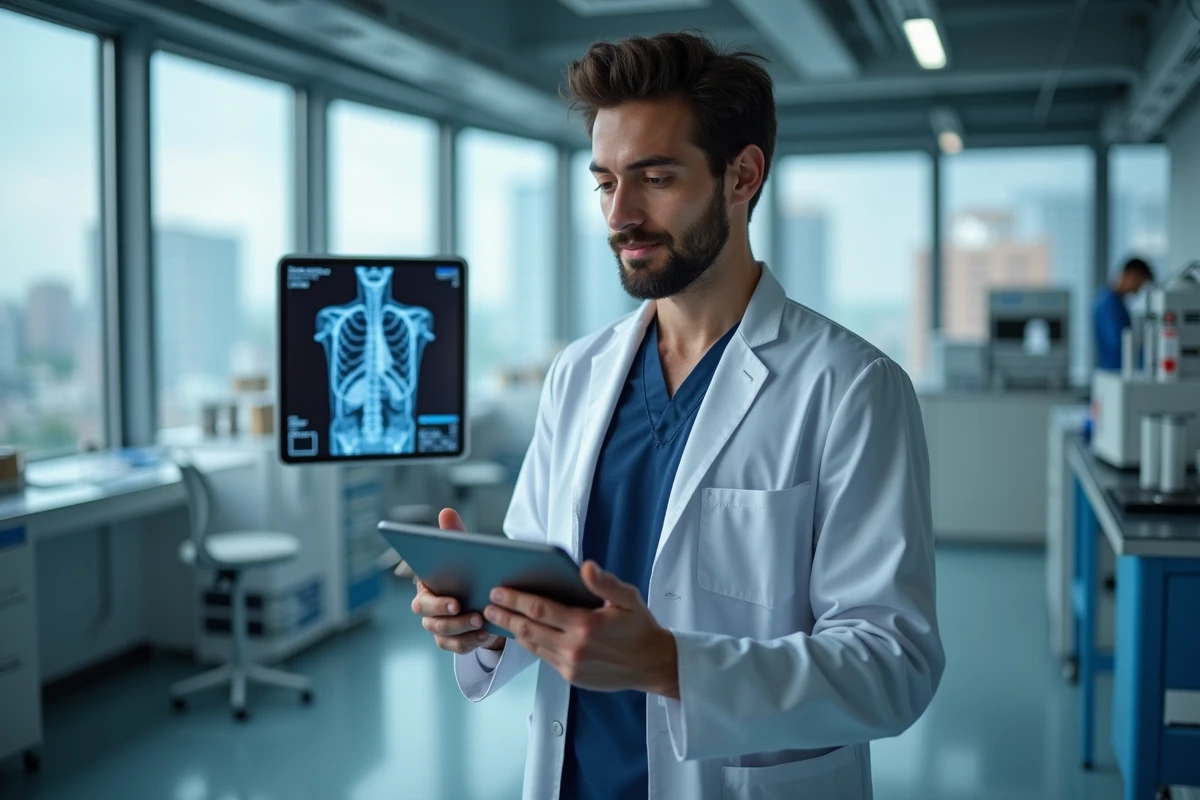
Early detection and therapeutic innovations: improving chances of recovery
Early detection is revolutionizing the journey of patients with lung lesions. Thanks to new tools, computed tomography (CT) and positron emission tomography (PET) provide more precise identification of suspicious anomalies. Now, liquid biopsy, capable of analyzing circulating tumor DNA, detects specific mutations without invasive procedures. This technological leap allows for the diagnosis of lung cancers at a stage where the hope for a cure is very real.
We are witnessing the advent of personalized medicine. Thanks to high-throughput sequencing, each tumor is analyzed in depth. The treatment plan is adjusted to the genetic profile: EGFR, ALK, ROS1, MET, or RET mutations. Trials such as OPTI-DEPIST-MUT demonstrate the value of targeted detection and individualized management from the screening phase.
To concretely illustrate these advances, here’s how new therapeutic approaches improve the fight against the disease:
- Tyrosine kinase inhibitors, combined with specific biomarkers, more effectively halt tumor progression.
- An earlier and more precise diagnosis allows for rapid direction of the patient to the most appropriate treatment.
- This coordination between radiologists, pathologists, and oncologists optimizes each step of the care pathway.
The fight against lung cancers is taking a new turn, driven by early detection, precision medicine, and the integration of cutting-edge technologies. The prospects for recovery, once limited, are now opening up for a generation of patients for whom the future is no longer just a matter of statistics.