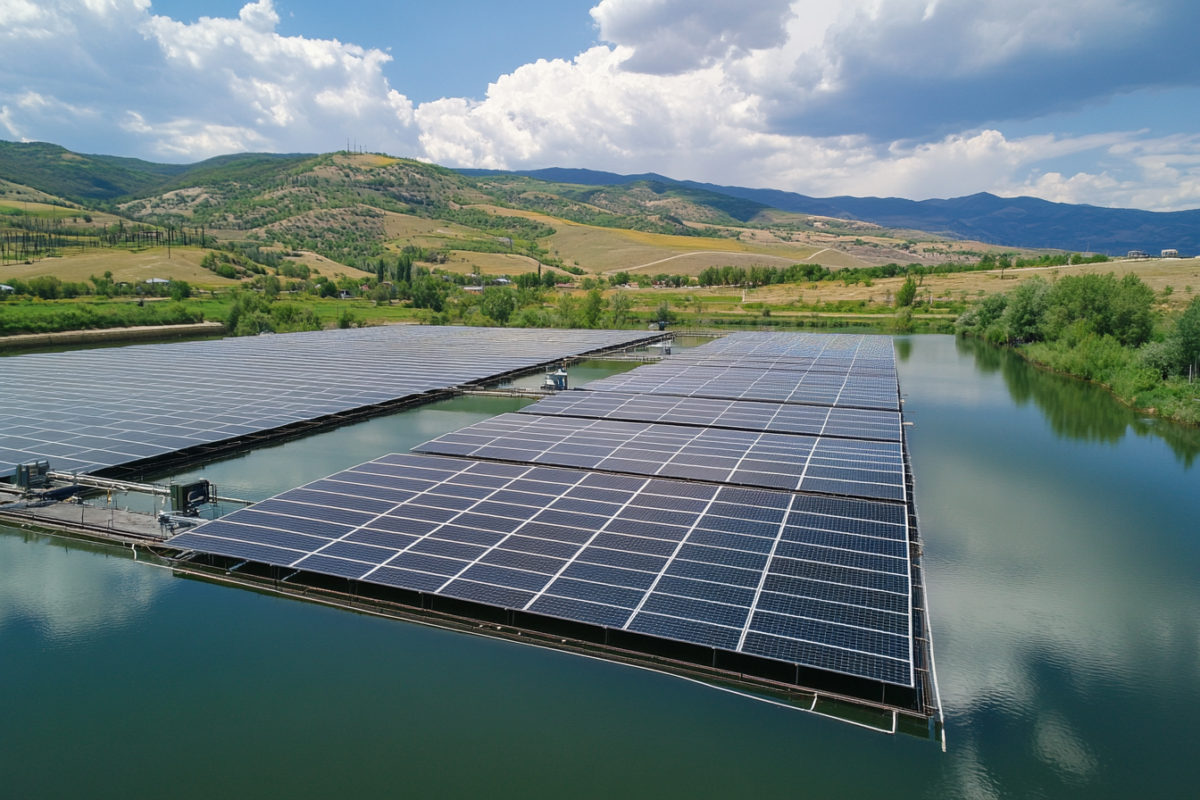
Renewable energies are playing an increasingly significant role in our society. Among them, solar panels stand out for their ability to capture sunlight and convert it into electrical energy. These devices, which are becoming more common on rooftops, in fields, and even underwater, represent a transition towards a more environmentally friendly energy consumption. The rise of this technology is not only a response to climate challenges but also a major economic opportunity for households and businesses. Let’s dive into the heart of this silent revolution that is shaping our energy future.
The operating principles of solar panels
Understanding how solar panels convert light into electricity is essential to grasp their efficiency and potential. This technology relies on innovations that have radically changed our relationship with energy.
- Photovoltaic effect: At the core of the panels are photovoltaic cells. These cells, typically made of silicon, capture photons from the sun. When a photon strikes the cell, it releases an electron, thus generating an electric current.
- Types of cells: Monocrystalline and polycrystalline cells are the most common. The former offer better efficiency while the latter are more economical to produce.
- Inverter: The current produced is direct, while our grid uses alternating current. The inverter converts this current so that it can be used by our household appliances.
- Grid: The energy produced can be consumed on-site or fed into the grid, thus optimizing resources.
Economic and environmental benefits of solar panels
Adopting solar panels is not just an ecological approach; it is also a wise economic move. This technology promises significant gains on multiple fronts.
First, installing solar panels on a home can considerably reduce energy bills. Since solar energy is free, the initial investment can be quickly recouped through the savings made. Furthermore, governments offer financial aid and tax credits to encourage the installation of solar systems. These aids reduce the acquisition cost and boost the return on investment.
Environmentally, solar panels contribute to the reduction of greenhouse gas emissions. By producing green energy, they decrease our dependence on fossil fuels. Finally, by harnessing solar energy, we preserve natural resources for future generations.
Challenges and innovations in the field of solar energy
Despite the numerous advantages, solar energy still faces certain obstacles to becoming the dominant energy source. Fortunately, research and innovation are opening up fascinating new perspectives.
- Energy storage: One of the main challenges remains the storage of solar energy. Innovations, such as high-capacity batteries, are being developed to ensure continuous use.
- Panel efficiency: Researchers are working on improving the efficiency of photovoltaic cells, particularly through the use of new materials like perovskite.
- Architectural integration: Solar panels are increasingly integrating into modern architecture. Solar tiles and photovoltaic facades are transforming buildings into energy producers.
- Circular economy: The end-of-life of panels also raises questions. Their recycling is a challenge for a true circular economy of solar energy.
Solar panels represent a promising technology capable of transforming our way of producing and consuming energy. Their development comes with major economic and environmental benefits, while requiring ongoing attention to technological challenges. Current innovations give hope for a future where solar energy will play a central role, thus contributing to a more sustainable and energy-autonomous world.