The country bow tie is not chosen like an evening bow tie. The material, drape, width of the ends, and tying technique respond to specific constraints related to the outdoors, natural light, and the less rigid dress codes of a country ceremony. Here we detail the technical criteria that make the difference between a suitable accessory and a rough choice.
Weight and weave: what distinguishes a country bow tie from a classic model
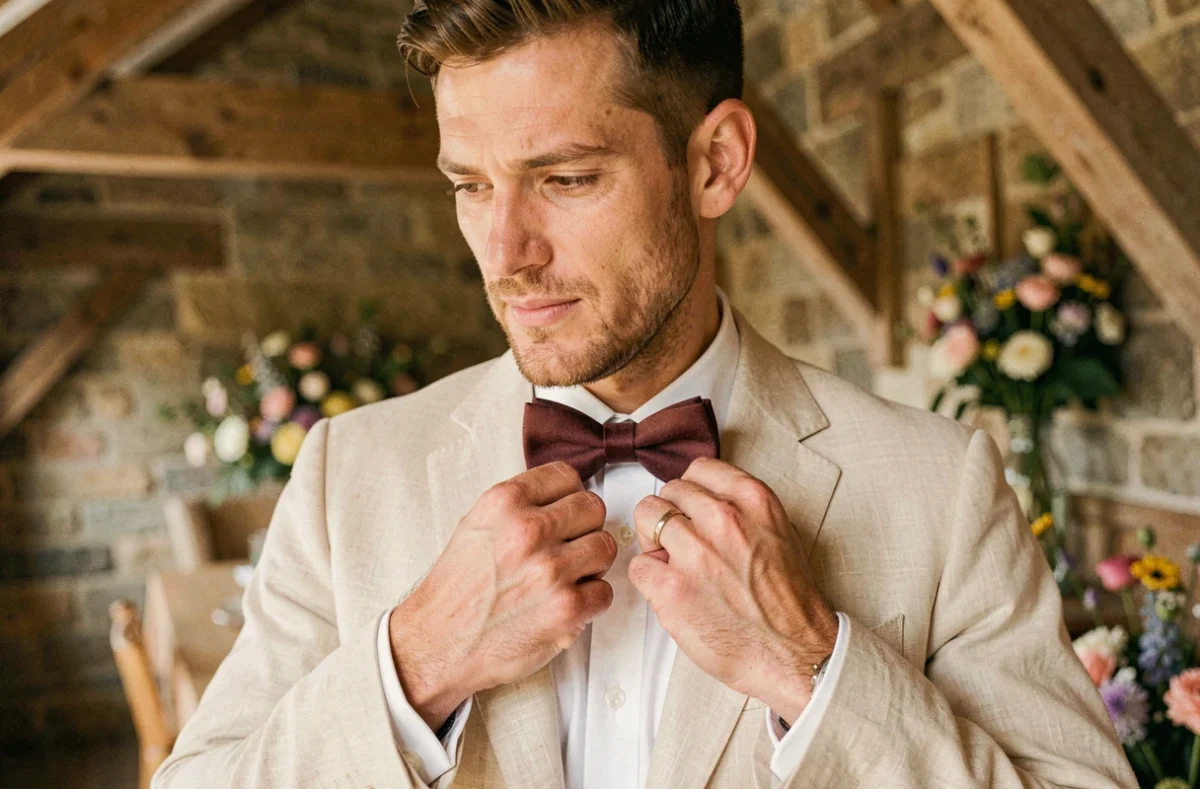
A bow tie intended for an outdoor wedding must withstand heat, wind, and several hours of wear without losing its shape. Fabrics with a canvas weave in linen or unlined cotton offer breathability that jacquard silk does not. Linen naturally wrinkles, contributing to the relaxed aesthetic sought in a country setting.
We recommend a sufficiently dense weight to maintain the volume of the bow without adding rigid interfacing. A fabric that is too light collapses within the first hour, while a fabric that is too heavy creates a compact effect unsuitable for the visual register of a linen or cotton suit.
Alternative materials like cork or wood are appealing for their originality. Cork has the advantage of being lightweight and resistant to moisture. Wood, on the other hand, requires a fixed pre-tied bow that limits collar adjustments. As highlighted in the country wedding article on Hucky, the choice of material conditions the overall style of the groom and his witnesses.
Textured cotton (chambray, seersucker) is a reliable compromise: it handles heat well, ties easily, and accepts dyeing in the typical colors of a country theme.
Color palette for an outdoor wedding bow tie
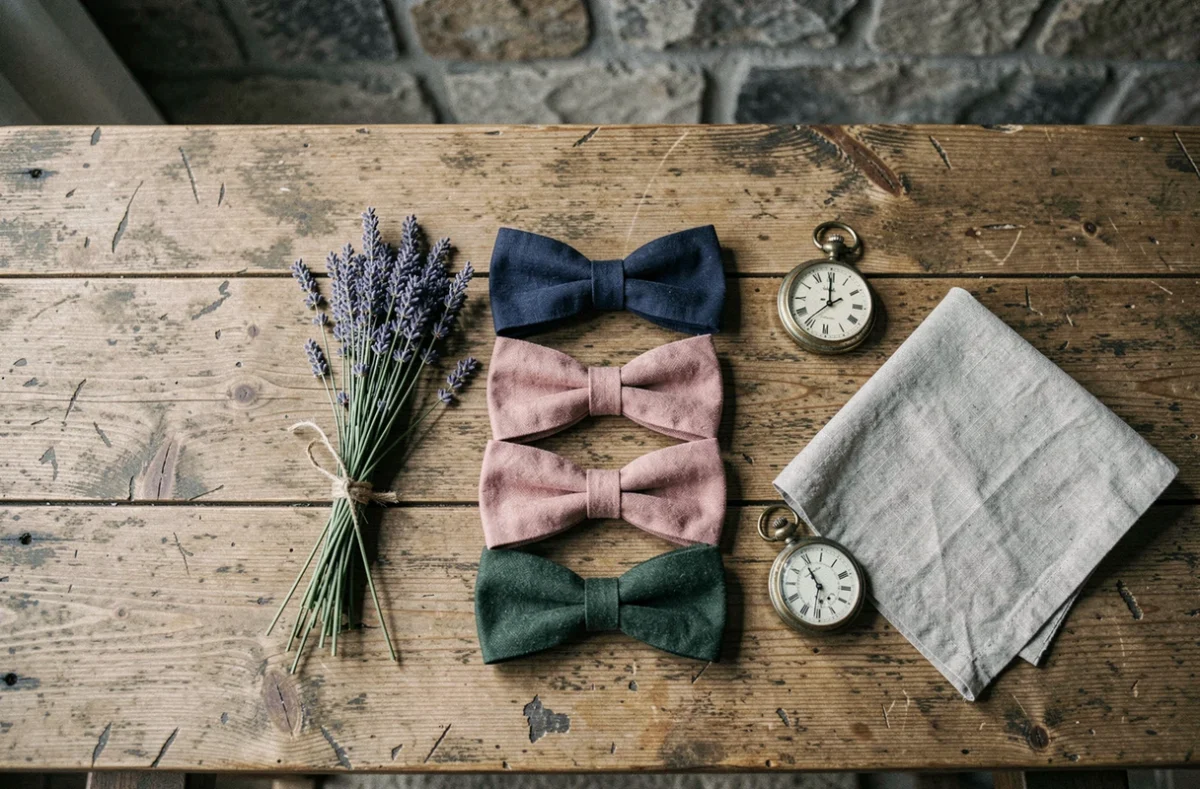
Muted and earthy tones work better in natural light than saturated colors. A deep navy blue or bright burgundy, suitable for an indoor ceremony, appear too dense under direct sunlight. Sage, terracotta, mustard, glacier blue, or cream tones blend into a green environment without creating visual breaks.
The chromatic coherence between the bow tie, the suit pocket square, and the decorative elements (table centerpieces, floral arch) enhances the visual unity of the event. We observe that the most successful country weddings limit the textile palette to two or three colors, presented in shades rather than stark contrasts.
Coordinating the groom and his witnesses without uniformity
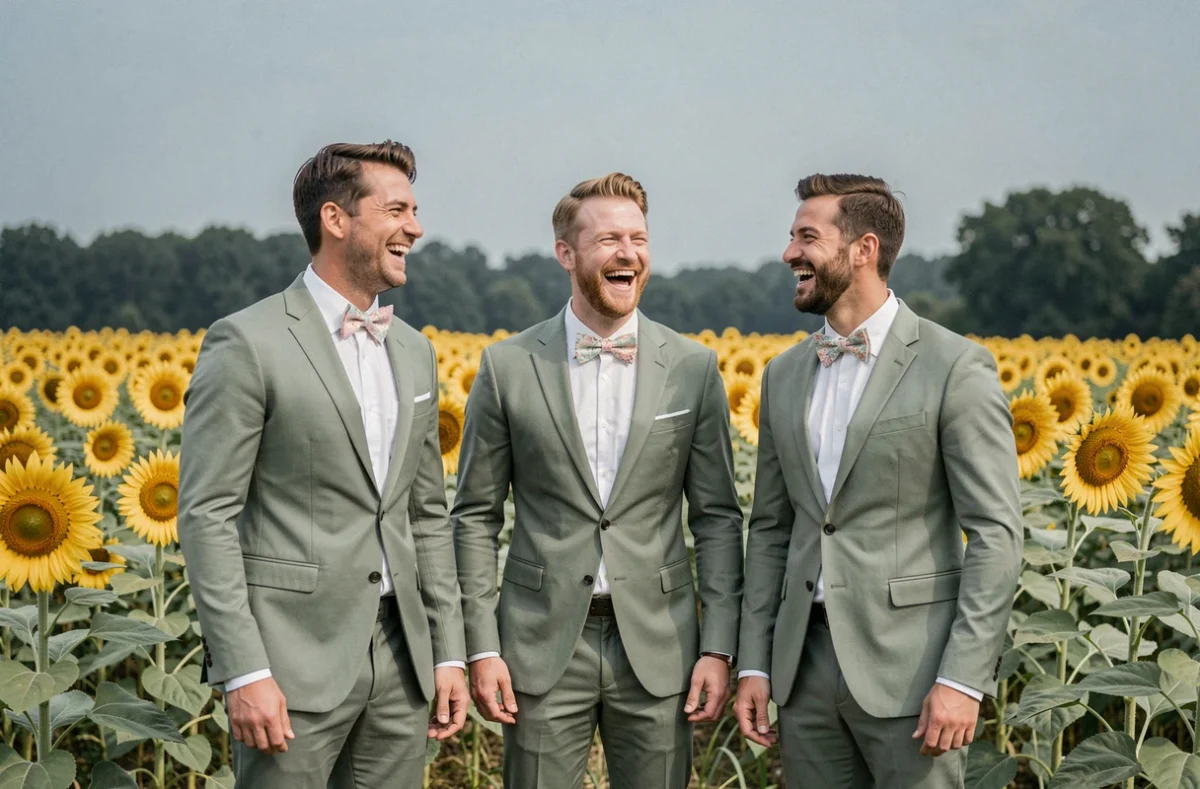
A common mistake is to buy the same bow tie for the entire party. The photographic result is flat. A more refined approach is to choose the same material (for example, linen) and vary the shades within the same color family.
- The groom wears the most pronounced shade or a distinctive pattern (micro-dots, fine stripes) to stand out visually in group photos.
- The witnesses adopt lighter or solid variations of the same color, creating harmony without uniformity.
- The young attendants can wear a model identical to that of the witnesses in an adapted size or switch to a wooden bow for a coherent quirky effect.
Tie-it-yourself or pre-tied bow tie: technical choice criteria
The self-tie bow creates an asymmetrical volume that adds character to the outfit. This slight irregularity perfectly aligns with the country spirit, where formal perfection is not the goal. The self-tie bow requires a longer strip of fabric and a minimum of practice, but the result is significantly better in photos.
The pre-tied model, fixed on an adjustable neckband, guarantees a symmetrical and quick result. It is suitable for witnesses or guests who are not familiar with the exercise. However, the bow remains fixed all day and loses its natural look as the shirt collar relaxes.
For a country wedding, we prefer the self-tie bow for the groom and the pre-tied for the rest of the party. This compromise ensures that the groom maintains a lively, slightly adjustable bow, while the witnesses benefit from quick setup on the big day.
Bow shape and face morphology
The width of the ends influences the proportion between the bow and the shirt collar. A slim bow tie (narrow ends) pairs well with a cutaway collar or a narrow French collar. A classic model with wide ends requires a more open collar to avoid fabric overflow.
A round face gains structure with a bow tie with pointed ends (diamond shape). An elongated face is better served by a model with rounded ends (batwing shape) that visually widens the chin line.
Textile traceability and responsible choice of a bow tie
Since October 1, 2025, French brands can voluntarily display the environmental cost of their clothing, calculated over the entire life cycle. Starting from October 1, 2026, a third party will be able to publish this score for a brand that has not communicated it itself, according to decree n° 2025-957.
Accessories like bow ties are not all subject to this regulation in the same way. Therefore, the ecological argument of a handmade bow tie must be independently verified: fiber origin, weaving location, dyeing process, and manufacturing conditions.
- A traceable French linen bow tie (cultivation, weaving, and manufacturing in France) offers a verifiable short supply chain.
- Certified organic cotton (GOTS) guarantees the absence of pesticides and control of working conditions, but weaving often takes place outside Europe.
- Cork mainly comes from Portugal, with a well-documented supply chain and low environmental impact during production.
French regulations require sellers to make information about the main stages of textile manufacturing accessible, including weaving, dyeing, and sewing. Requesting this information before purchase remains the best reflex to validate a brand’s claims.
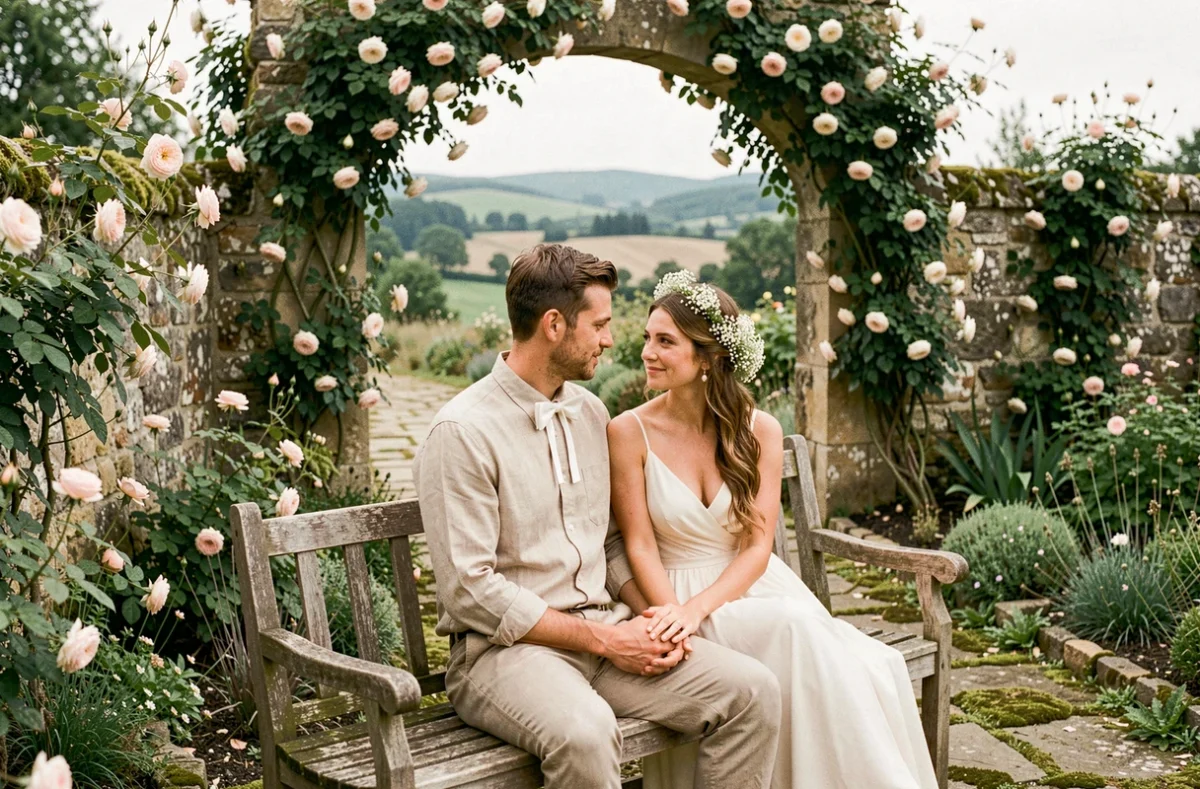
The country bow tie plays on three parameters: the material suited for the outdoors, the color palette coherent with the green decor, and the type of tying chosen according to the role in the ceremony. A groom who masters these technical criteria avoids a generic accessory and achieves a photographic result worthy of the event.