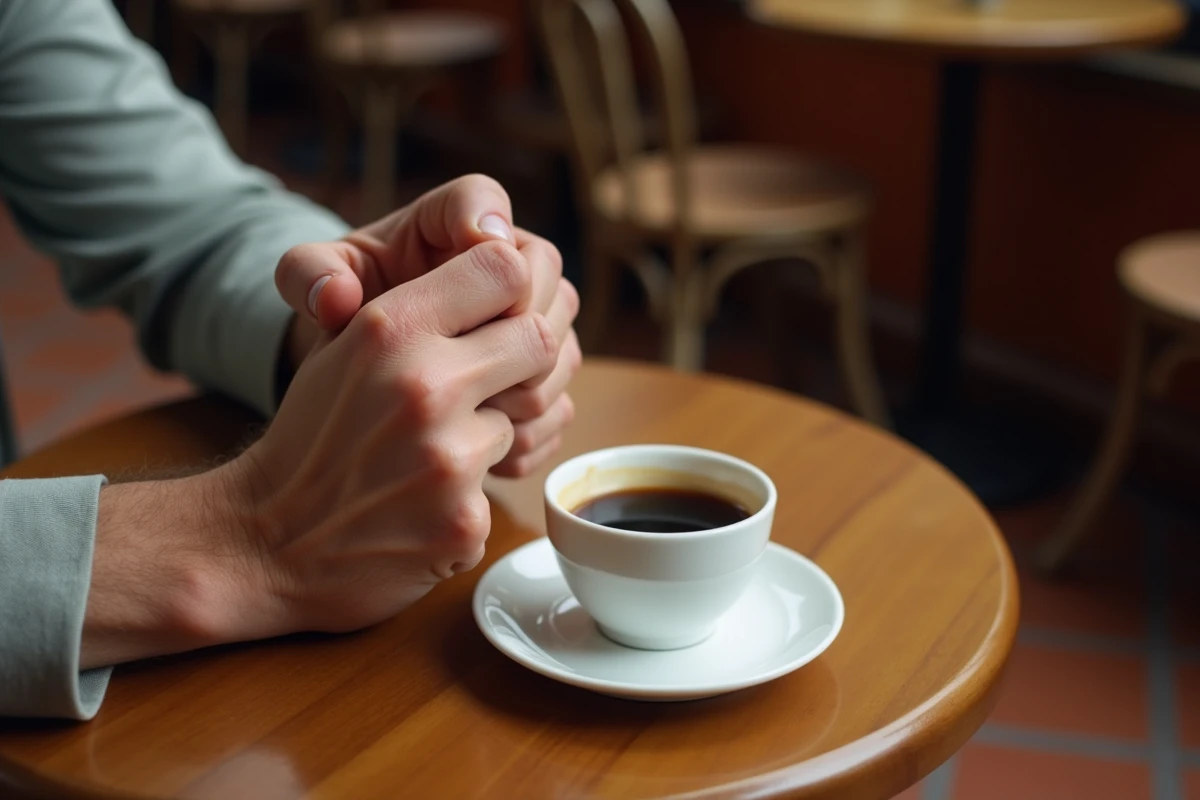
We still regularly encounter, in a taxi in Dakar, at a market in Hanoi, or in a neighborhood bar in Réunion, men sporting a pinky nail that is significantly longer than the others. The common reflex is to see it as a unique, often negative sign. The reality is more complex: depending on the times, geographies, and social environments, this pinky nail has carried radically different, sometimes contradictory meanings.
Long pinky nail and health risks: what dermatologists observe
Before discussing symbols or traditions, we can start from a concrete medical observation. A long nail on a single finger is more likely to catch, crack, and retain dirt and microorganisms. Dermatologists and podiatrists have reported for several years an increased risk of onychomycosis (fungal nail infection) and paronychia associated with this practice.
The tip of the pinky, thinner than that of the other fingers, offers less skin surface under the nail to withstand pressure. A minor impact can cause a crack that becomes an entry point for fungi or bacteria. It is also observed that the length of the nail alters how the hand is washed: soap does not effectively reach the underside of a several-centimeter-long nail.
For those exploring the meaning of the long pinky nail, this health dimension is rarely mentioned, even though it has a concrete impact on the decision to keep or not this attribute.
Ottoman Empire, Tsarist Russia, China: the pinky nail as proof of idleness
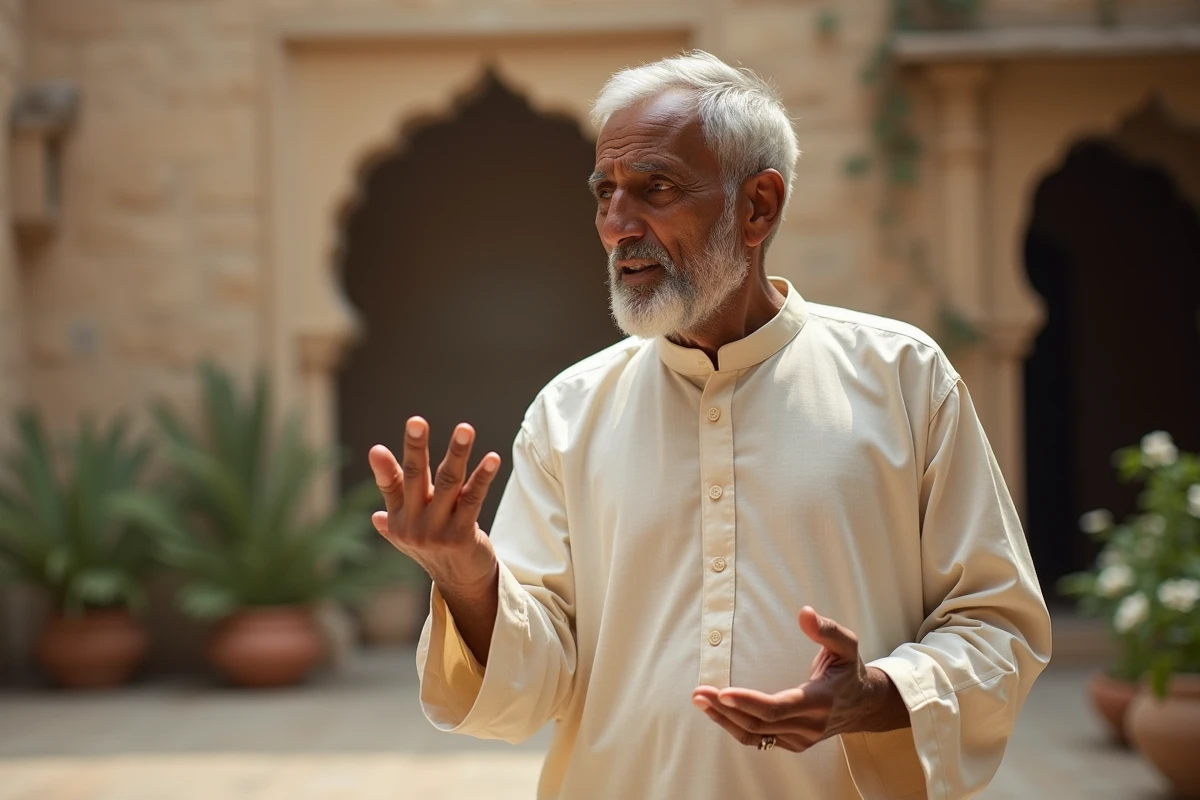
The best-documented historical explanation takes us back to the Ottoman Empire. Men of high status would grow their pinky nail to signify that they did not derive their wealth from manual labor. A long nail cannot withstand a day of plowing or craftsmanship: its mere existence proved total detachment from any physical activity.
The same mechanism is found in Tsarist Russia. In Anna Karenina, Tolstoy depicts an exchange between a noble peasant and a Moscow prince. The former cuts his nails and rolls up his sleeves to work. The latter, in Moscow, wears accessories on his wrists and cultivates long nails, proof that he does not need his hands.
The long nail functioned as a visible class marker, readable by all, without jewelry or expensive clothing. In China, some business leaders perpetuate this tradition: a pinky adorned with an oversized nail signals high social status and a claimed form of idleness.
This practice was also observed in Algiers in the 1950s and in regions of sub-Saharan Africa, according to direct testimonies, with the same logic: showing that one does not work with their hands.
Long pinky nail today: between neighborhood codes and social stigma
The contemporary reading of this nail has shifted. In several qualitative social science surveys on informal economies, interviewees report interpreting the long pinky nail in very contradictory ways:
- Sign of belonging to a network (drivers, artisans, merchants, gamblers) where this attribute functions as a micro-marker of recognition among peers
- Direct association with drug use, the nail supposedly serving as a “spoon” to scoop small amounts of powder
- Simple remnant of an old neighborhood fashion, kept out of habit without precise meaning
This ambivalence has become pronounced since the 2010s. The same long nail can be read positively or negatively depending on the observer, the country, and the environment. In Réunion, the practice still sparks lively debates between those who see it as a cultural heritage and those who associate it with illicit behaviors.

Reactions vary on this point: in some Southeast Asian cities, the long nail remains a sign of respectability among older men, while in Western metropolises, it predominantly provokes distrust.
Long pinky nail in LGBTQ+ circles: subversion and play with masculinity
A more recent phenomenon deserves attention. Gender sociology research has identified that the long pinky nail is now used in some LGBTQ+ circles to play with traditional masculinity codes. The idea: reclaim a historically masculine and popular attribute, but paint it, decorate it, or integrate it into a queer aesthetic.
This subversion transforms an old status symbol into a tool of identity expression. It shifts from a class marker to a gender marker, illustrating how the meaning of a simple nail can be reconfigured in a generation.
This generational evolution does not appear in the usual explanations, which remain confined to historical or folkloric origins. However, it reflects a real shift in the social function of this bodily attribute.
Forgotten practical uses of the pinky nail
Beyond the symbolic, there are strictly functional uses that have traversed the ages:
- Opening envelopes and small packages, a common gesture in administrative settings before the widespread use of letter openers
- Manipulating small objects (electronic components, beads, coins) in fine craftsmanship trades
- Stimulating precise acupuncture points by practitioners of traditional Chinese medicine, who use the nail’s surface as a pressure tool
These concrete uses explain why the practice has survived independently of any symbolic dimension. A jewelry artisan or a traditional medicine practitioner does not need to display social status: the long nail is simply a tool at the tip of the finger.
The meaning of the long pinky nail is therefore not limited to a single tradition or a dark explanation. It depends on the context, the time, and the observer. The same nail tells the story of the Ottoman Empire, a working-class neighborhood in Saint-Denis of Réunion, and a queer salon in Paris, each time with a different meaning.