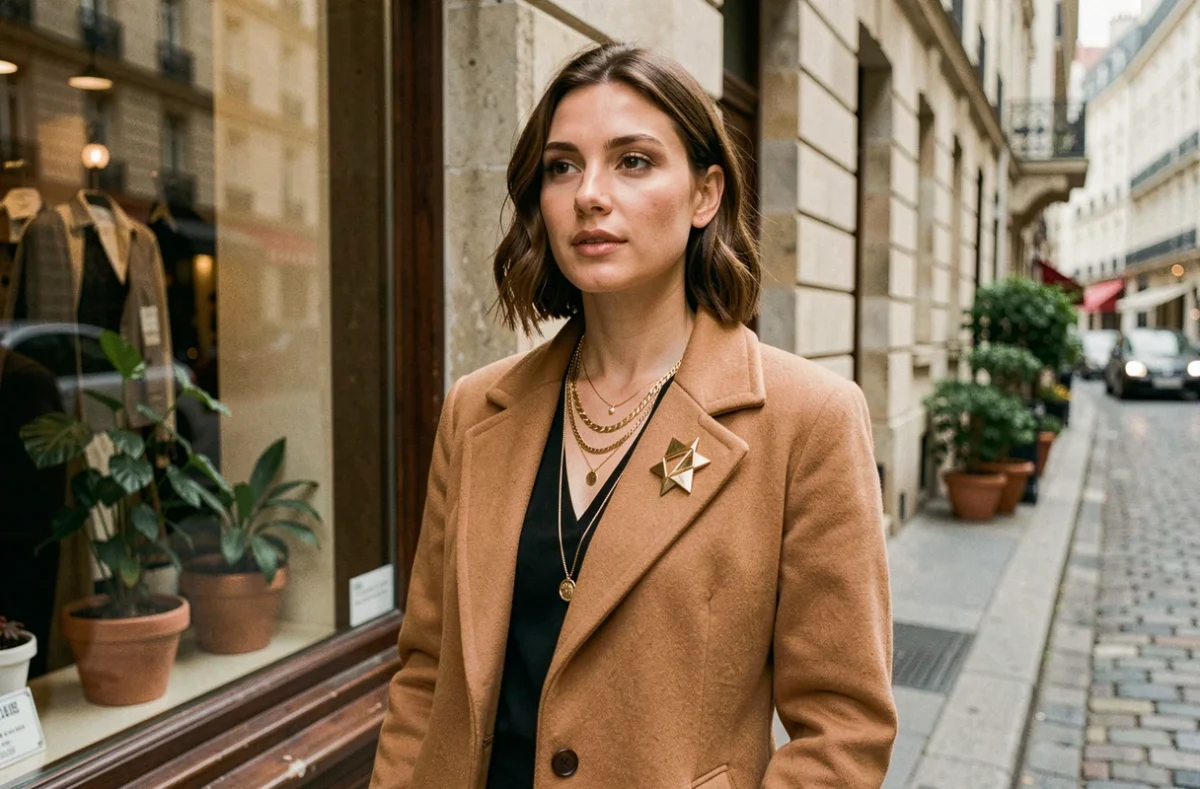
An accessory is not chosen to complete an outfit. It is chosen to impose a silhouette reading. The difference between a flat look and a memorable one rarely lies in the main garment: it lies in the piece that captures attention first, the one that directs the gaze and establishes visual coherence. Affirming your style with unique accessories every day requires mastering a few precise mechanics, far beyond the generic advice of “add a scarf.”
Repairing and customizing an accessory rather than replacing it
The most distinctive piece in a wardrobe is often one you already own, provided you allow it to evolve. In France, the textile and shoe repair bonus applied directly by Refashion-certified repairers makes this approach more accessible. Shoe repair requests overwhelmingly dominate, but alterations on clothing and textile accessories remain an underutilized avenue.
Having an aged leather bag resized, replacing the buckles on a belt, or dyeing a faded pair of shoes transforms a mundane object into a unique piece. The cost remains moderate thanks to the bonus, and the result is by definition unique since it depends on the wear specific to each accessory. Creators listed on always-unique.net offer precisely this type of reworked or limited edition pieces, designed so that two wearers never cross paths with the same item.
Comparing repair and second-hand purchase only makes sense piece by piece. For a pair of shoes, the structural condition (sole, heel counter, shank) determines whether the repair is worthwhile. For a piece of jewelry or a scarf, artisanal customization almost always outweighs replacement.

Everyday style accessories: the rule of a unique focal point
Layering necklaces, rings, hats, and glasses on the same day creates visual noise, not style. Only one accessory should draw attention, while the others remain in discreet support. This principle is based on visual hierarchy: the human eye seeks an anchor point before sweeping across the whole.
Defining the focal point according to the base outfit
On a dark monochrome outfit, a bright-colored bag or a pair of thick-framed glasses works as a focal point. On a patterned outfit, it’s better to opt for a simple piece of jewelry in matte metal that anchors the silhouette without overwhelming it.
The focal point also changes depending on the context. In a professional setting, a watch with a distinctive dial or a well-crafted belt is sufficient. In a casual context, an asymmetrically tied scarf or large earrings take over.
- Structured solid outfit: favor a colorful or textured accessory (raffia bag, resin jewelry, two-tone acetate glasses)
- Patterned or layered outfit: choose a neutral but unique accessory in shape or material (brass cuff bracelet, raw leather braided belt)
- Minimalist casual outfit: focus on a single statement piece of jewelry, worn alone, without accumulation
Materials and finishes: what distinguishes a unique accessory from a mass-produced one
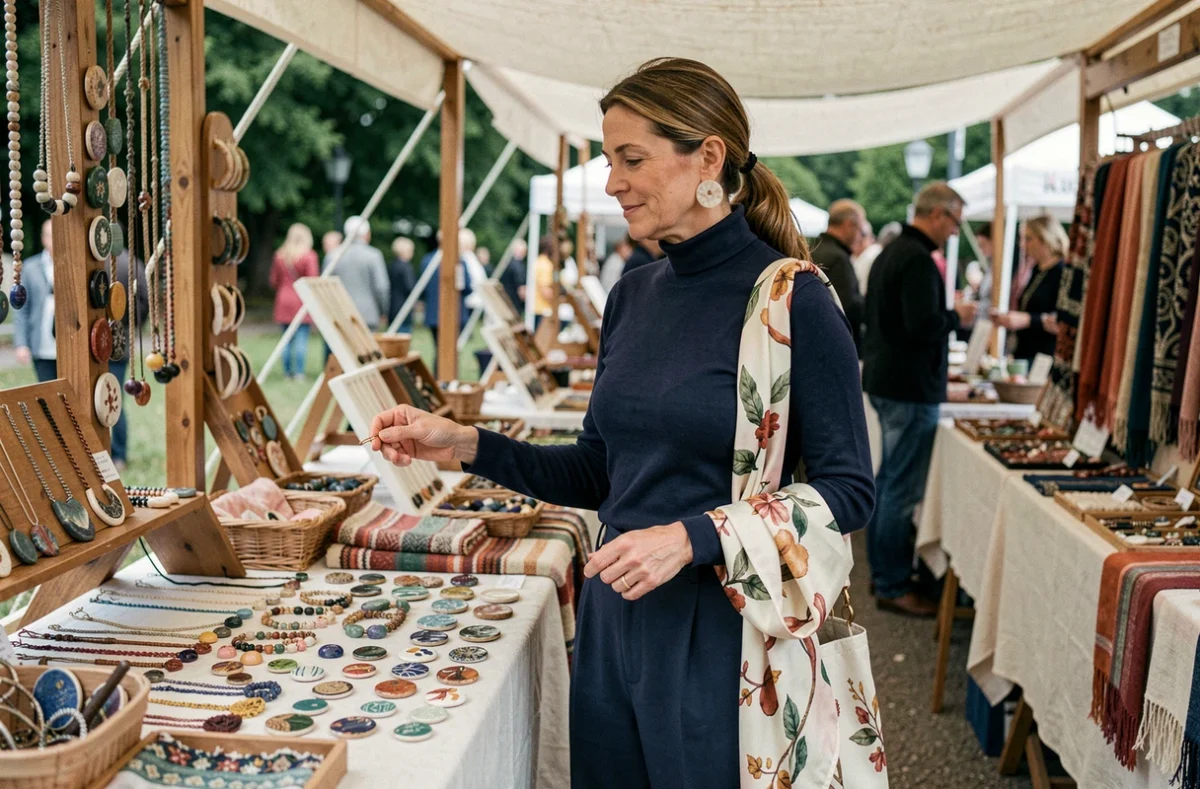
The surface finish immediately reveals the origin of an accessory. Vegetable-tanned leather develops a patina unique to its wearer within weeks. Hand-cast metal shows slight irregularities that industrial molding does not replicate. These details may not be visible in photos, but they can be perceived within seconds in reality.
Materials to watch for if you seek originality: recycled brass, natural horn (each piece has a different grain), fish leather (salmon, Nile perch), bio-sourced resins, and reworked deadstock textiles. These materials impose production constraints that mechanically limit volumes, thus reducing the likelihood of encountering a duplicate.
Check traceability with the digital product passport
European regulation is moving towards a digital product passport that will document the composition, origin, and reparability of textile articles and accessories. Some brands are already voluntarily adopting it. This passport allows you to verify whether an accessory presented as artisanal or limited edition truly is, and not just marketed as such.
Accessorizing mistakes that neutralize the desired effect
Three mistakes consistently occur and nullify the impact of an otherwise well-chosen accessory.
- Matching the metal of jewelry and the metal of the belt buckle too strictly. An intentional mix of gold/silver looks more deliberate than an all-gold look that resembles a uniform
- Wearing a statement accessory without adapting the rest of the outfit. A statement necklace over a heavily patterned neckline creates a visual clash. The focal point only works if the surrounding space remains understated
- Accumulating trendy pieces from the same season. Three “seen everywhere” accessories worn together produce the exact opposite of originality: a look that feels dated in six months
The unique accessory is not determined by the label or the price. It is built through the coherence between the piece, the silhouette, and the wearer’s intention. A vintage scarf found and tied in a certain way can have more stylistic impact than a designer piece worn without thought.
The true marker of a consistently affirmed style is consistency. Wearing the same type of signature piece day after day establishes a visual identity that those around you eventually associate spontaneously with the person. It’s better to have one recurring and well-mastered accessory than a constant rotation that dilutes the message.